

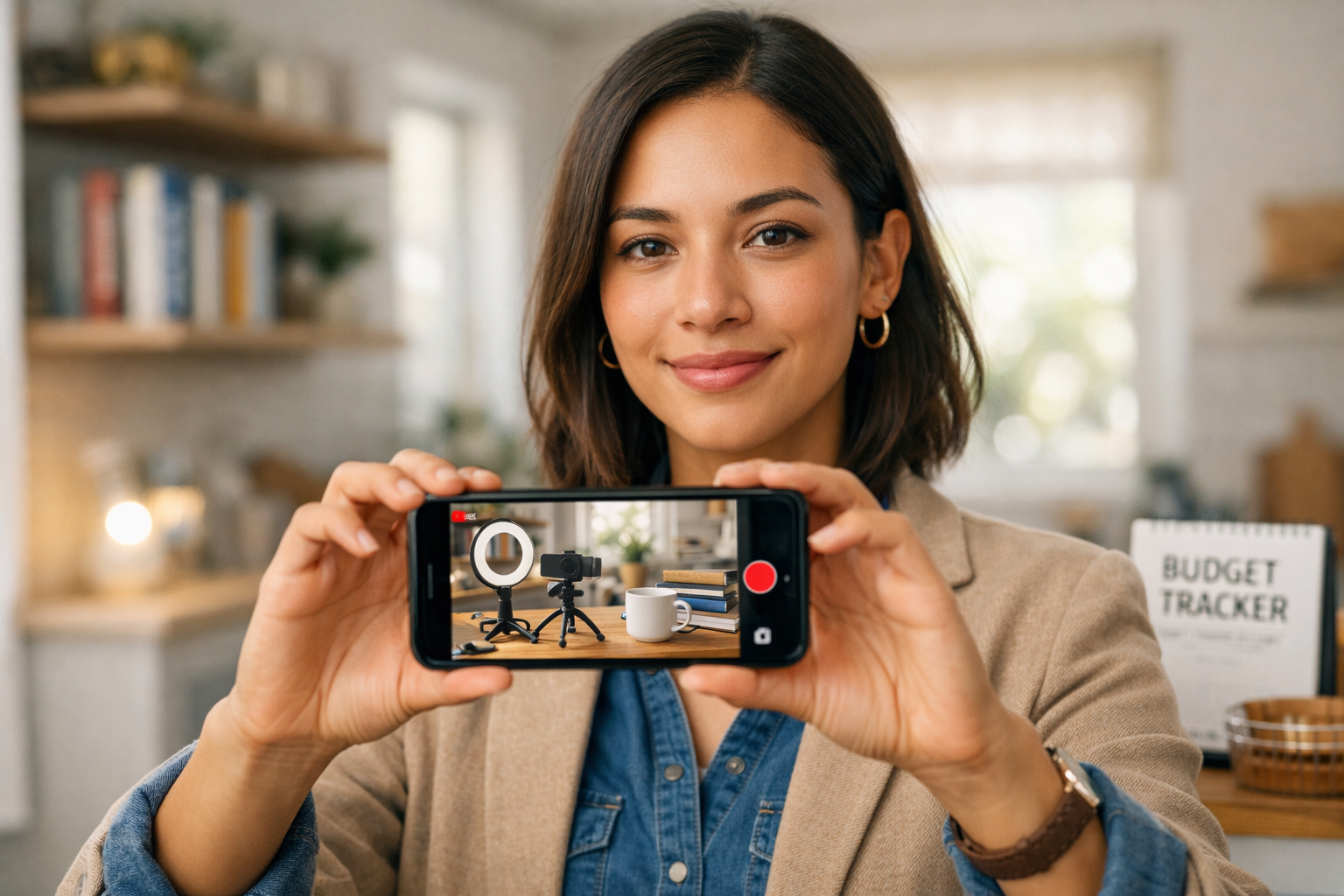
Let me be honest with you — when I first thought about starting a finance vlog, I almost talked myself out of it. I kept thinking I needed a professional camera, a fancy studio setup, and some kind of broadcasting degree. Spoiler alert: I didn't need any of that. What I needed was already sitting in my pocket.
If you've been wanting to talk about budgeting, investing, debt payoff journeys, or just everyday money tips, your phone is genuinely all you need to get started. Here's everything I wish someone had told me before I hit record for the first time.
Get Your Camera Settings Right First
Before you film a single second of content, open your phone's camera settings. This is the step most beginners completely skip, and it shows.
For finance vlogs — where you're usually talking to the camera or walking through charts and numbers — 1080p at 30fps is your sweet spot. It's a clean, professional-looking format that doesn't eat up all your storage and uploads quickly. If you have a newer device like an iPhone 14 or a recent Android flagship, you can experiment with 4K, but honestly, 1080p is more than enough when you're starting out.
One more thing: always use your back camera. I know the front camera feels more natural for selfie-style filming, but the back camera produces significantly sharper, more detailed footage. Prop your phone up, look slightly above the lens, and you'll look like you actually know what you're doing — even on day one.
Lighting Makes or Breaks Your Finance Content
Nobody is going to trust your stock market breakdown if they can barely see your face. Lighting is everything, and the good news is it doesn't have to cost much.
Natural light is your best friend. Set up near a window, face the light source directly, and you'll be amazed at how professional your video looks without spending a single dollar. If you're filming in the evenings or in a darker space, a basic ring light — which you can find for under $30 — will completely transform your video quality.
For finance content specifically, good lighting also matters when you're filming your screen, charts, or notebooks. Make sure there's no glare bouncing off your materials, and your viewers will be able to follow along easily.
Audio Quality Matters More Than You Think
Here's something nobody really warns you about: people will tolerate average video quality, but they will click away immediately if your audio is bad. For a finance vlog where you're explaining concepts, walking through numbers, or giving advice, clear audio is non-negotiable.
Your phone's built-in microphone is decent in a quiet room, but the moment there's background noise — a fan, traffic outside, your neighbor's dog — it becomes a problem. Investing in a simple clip-on lavalier microphone that plugs into your phone is one of the best $20–$40 decisions you can make early on.
If you're on a tight budget (which, hey, is kind of the point of a finance channel), at minimum film in the quietest room in your home and speak clearly and closely to your phone.
Content Strategy: What to Actually Talk About
This is where a lot of finance vloggers get stuck. They know money stuff, but they don't know how to package it for an audience.
Here's a simple framework that works:
- Beginner topics — budgeting basics, opening a savings account, understanding credit scores
- Personal stories — your own debt payoff journey, money mistakes you've made, financial wins
- Timely content — tax season tips, inflation advice, interest rate changes
The key is consistency. Uploading once a week on the same day trains your audience to expect you. It also signals to search algorithms that your channel is active and worth recommending.
Don't overthink your first few videos. Done is better than perfect, especially when you're learning your style and finding your voice.
Editing and SEO: The Finishing Touches
You don't need a desktop editing suite. Apps like CapCut, InShot, or even your phone's native editor are more than capable for finance vlogs. Keep your edits clean — cut out long pauses, add text overlays when you mention key numbers or terms, and keep videos between 8–15 minutes for optimal watch time.
For SEO, think about what your ideal viewer is actually searching for. Titles like "How I Paid Off $20,000 in Debt in One Year" or "5 Budgeting Tips for Beginners" perform far better than vague titles. Use those same keywords in your description and tags.
Final Thoughts
Starting a finance vlog is one of the most rewarding things you can do — both for your audience and for your own financial clarity. Teaching money concepts forces you to truly understand them yourself, and building a community around financial wellness is genuinely meaningful work.
You already have the most important tool. Now you just need to press record.


Share:
Why Universities Are Switching to Device Subscriptions — And Why Your Business Should Too